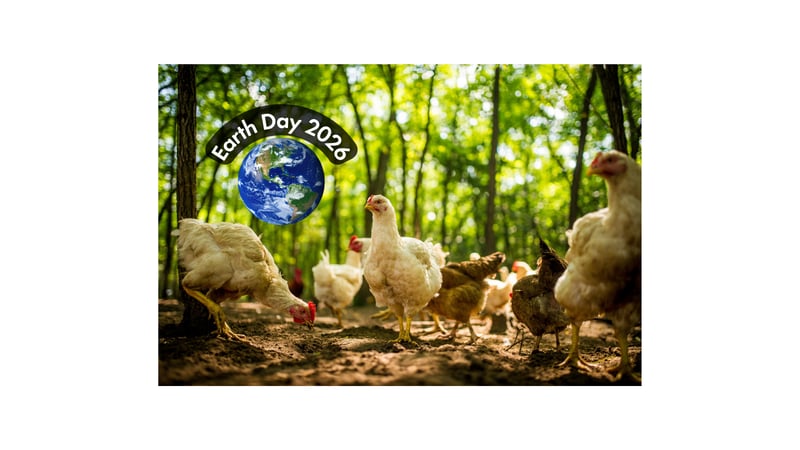
Earth Day 2026: Why Protecting the Planet Starts with Animals and Food Systems
Blog
Every year, Earth Day reminds us to protect the planet. But in 2026, that conversation needs to go deeper.
Because protecting the Earth is no longer just about planting trees or reducing plastic use. It is about the systems we rely on every day, especially how we produce food and how we treat animals.
The truth is simple. If we ignore animal welfare and food systems, we miss a major part of the environmental crisis.
Why Animal Welfare Is Central to Protecting the Planet
Animals are not separate from the environment. They are part of it.
When animals are exploited, confined, or removed from their natural systems, the effects ripple outward. Ecosystems become unbalanced. Disease risks increase. Communities are affected.
Yet many global conversations still treat animal welfare as a side issue.
It is not.
It is a core part of building a future that works for people, animals, and the planet.
How Factory Farming Is Impacting the Environment, Health, and Communities
Factory farming is often presented as a solution to food security. But the reality tells a different story.
Across the world, industrial livestock production is linked to environmental degradation, public health risks, and growing inequality. In Africa, where food systems are closely tied to local livelihoods, the risks are even greater.
The Link Between Factory Farming and Climate Pressure
Industrial livestock systems contribute significantly to greenhouse gas emissions, deforestation, and water stress.
These systems are resource-intensive. They rely on large quantities of feed, land, and water, placing increasing pressure on already fragile ecosystems.
Public Health Risks: Zoonotic Diseases and Antimicrobial Resistance
Factory farms create conditions where diseases can spread more easily.
High-density animal confinement increases the risk of zoonotic diseases, infections that can pass from animals to humans. At the same time, the overuse of antibiotics in these systems contributes to antimicrobial resistance, a growing global health threat.
Why Industrial Farming Threatens Smallholder Farmers in Africa
Africa’s food systems are largely built on smallholder farmers, who produce a significant portion of the continent’s food.
When factory farming expands, it often concentrates power in the hands of a few large players. Small-scale farmers struggle to compete, and local food systems weaken.
This is not just an environmental issue. It is an economic and social one.
Wildlife Exploitation and Its Hidden Environmental Costs
Wildlife plays a critical role in maintaining healthy ecosystems. But exploitation, whether through trade, captivity, or tourism, disrupts that balance.
When animals are removed from their natural environments or used for profit, ecosystems lose key species and functions. The result is long-term environmental damage that is often overlooked.
How Wildlife Trade and Captivity Disrupt Ecosystems
Wildlife trade and captive industries can reduce biodiversity and weaken ecosystems.
These practices often prioritise profit over ecological balance, putting both animals and the environment at risk.
Why Ethical Tourism Matters for the Planet
Tourism choices have real consequences.
Travel experiences that involve animal exploitation, such as captive interactions or performances, can drive demand for harmful practices. On the other hand, ethical tourism supports wildlife in their natural environments and contributes to long-term sustainability.
Why Africa’s Food Systems Are at a Turning Point
Africa is at a critical moment.
Investment decisions being made today will shape the continent’s food systems for decades. Increasingly, large-scale industrial agriculture is being introduced as a model for growth.
But this raises an important question.
Is this the right path?
Evidence shows that factory farming can increase environmental pressure, undermine smallholder farmers, and create long-term risks for food security.
Africa does not need to import models that create harm. It has the opportunity to build systems rooted in resilience, local knowledge, and sustainability.
What a Sustainable and Humane Future Could Look Like
A better path exists.
One that supports both people and the planet.
Investing in Agroecology and Smallholder Farmers
Agroecological approaches focus on working with nature, not against it.
They support biodiversity, improve soil health, and strengthen local food systems. Most importantly, they empower smallholder farmers, who are already feeding communities across Africa.
Building Food Systems That Protect People, Animals, and the Planet
Sustainable food systems are not just about production. They are about balance.
They recognise that:
- Healthy ecosystems support food security
- Animal welfare matters
- Communities should benefit, not be displaced
This is the kind of future worth investing in.
What You Can Do This Earth Day
Change starts with awareness, but it does not stop there.
You can:
- Support sustainable and ethical food systems
- Make informed choices about the food you consume
- Avoid tourism experiences that exploit animals
- Share information and raise awareness
👉 Add your voice to the call for a just transition away from factory farming:
https://bit.ly/JTHSEFS
A Better Future Starts with Better Choices
Earth Day is a reminder. But it is also a call to act.
The choices we make today, as individuals, communities, and institutions, will shape the future of our planet.
Protecting the Earth means looking at the full picture.
It means rethinking how we treat animals.
It means transforming our food systems.
It means choosing solutions that support life in all its forms.
Because the future of the planet depends on it.
FAQs
- What is factory farming?
Factory farming is an intensive system of animal agriculture where large numbers of animals are kept in confined conditions to maximise production and profit.
- Why is factory farming a concern in Africa?
It can increase environmental pressure, create public health risks, and undermine smallholder farmers who are central to local food systems.
- How does animal welfare relate to Earth Day?
Animal welfare is closely linked to environmental health. The way animals are treated affects ecosystems, biodiversity, and public health.
- What is agroecology?
Agroecology is a sustainable farming approach that works with natural systems to improve food production, biodiversity, and resilience.
- What can individuals do to support change?
People can make informed food choices, support ethical tourism, raise awareness, and advocate for policies that promote sustainable food systems.