Why African Grey Parrots Do Not Belong in Our Homes
Blog
Every year on World Parrot Day, people around the world celebrate the beauty, intelligence, and charm of parrots. Few species capture attention quite like the African grey parrot, famous for its ability to mimic human speech and form strong emotional bonds.
But behind the fascination lies a difficult truth.
The same qualities that make African grey parrots appealing to people also make them deeply unsuitable for captivity. These are not domesticated animals. They are highly intelligent wild birds with complex emotional, social, and behavioural needs that captivity often fails to meet.
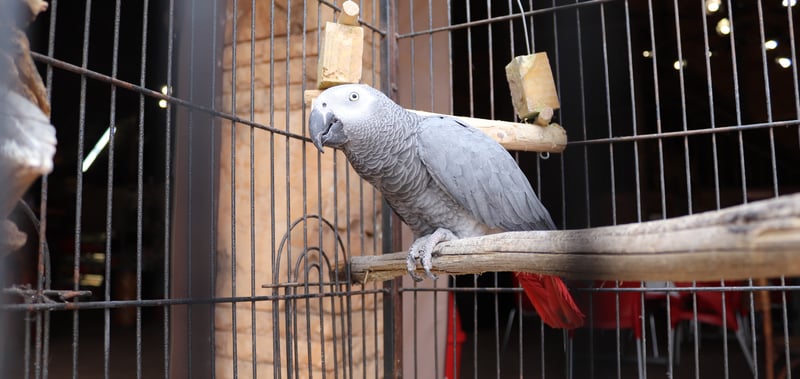
Across Africa, African grey parrots continue to face pressure from habitat loss, wildlife trade, and demand from the exotic pet market. Keeping them in cages may appear harmless, but for many parrots, life in captivity can mean stress, isolation, poor welfare, and lifelong suffering.
African Grey Parrots Are Among the Most Intelligent Birds in the World
African grey parrots are extraordinary animals.
Research has shown that they can solve problems, recognise shapes and colours, communicate intentionally, and even understand basic concepts. Some studies suggest their cognitive abilities can be comparable to those of a young child.
In the wild, African grey parrots live rich and socially connected lives. They form strong bonds, cooperate with members of their flock, and communicate constantly with one another. They are rarely alone.
These parrots also fly long distances daily while foraging for food across forests in western and central Africa. Their lives involve movement, stimulation, communication, and social interaction.
A cage cannot recreate that environment.
Captivity Often Causes Stress and Suffering
Many people are unprepared for the reality of keeping an African grey parrot as a pet.
These birds can live for up to 60 years, meaning caring for them is a lifelong commitment that few people are realistically prepared for. Their intelligence and emotional sensitivity also mean they require constant stimulation, social interaction, and space.
When these needs are not met, the consequences can be severe.
African grey parrots kept in captivity are known to develop obsessive and compulsive behaviours linked to chronic stress. One of the most common is feather plucking, where birds pull out their own feathers repeatedly, often causing permanent damage. Experts have compared this behaviour to self harm in humans.
Parrots can also become emotionally distressed when repeatedly rehomed throughout their lives, something that happens frequently when owners realise how difficult they are to care for.
Even in homes where owners have good intentions, captivity can still fail to meet the needs of these highly social wild animals.
The Wildlife Pet Trade Continues to Put African Grey Parrots at Risk
The popularity of African grey parrots in the exotic pet trade has placed enormous pressure on wild populations.
African grey parrots are currently listed under CITES Appendix I, meaning international commercial trade is banned except under strict conditions. Despite this protection, illegal trade and trafficking continue to threaten the species.
Conservation experts estimate that African grey parrot populations have declined by up to 79% in the last 50 years.
The trade itself is also incredibly cruel.
Studies suggest that between 30% and 66% of African grey parrots captured from the wild die before they are even sold. Many suffer during trapping, transport, confinement, and handling.
Some trapping methods are especially inhumane, involving sticky substances placed on tree branches to trap parrots by their feet and wings. Injured birds are sometimes used as live decoys to attract other parrots.
Behind every bird sold is often a long chain of suffering.
Wild Animals Belong in the Wild
African grey parrots are not decorations, status symbols, or entertainment.
They are wild animals with lives, relationships, and instincts shaped by nature. In the wild, they raise young collectively, communicate constantly with their flock, and spend their days flying freely across forests.
Captivity limits nearly every part of that natural behaviour.
Admiring a wild animal should not require owning it.
Choosing not to buy parrots as pets helps reduce demand for the wildlife trade and protects animals from exploitation and suffering. Supporting stronger wildlife protection laws and conservation efforts also plays an important role in protecting these remarkable birds for future generations.
Conclusion
African grey parrots are among the most intelligent and emotionally complex birds in the world. But intelligence is not a reason for captivity. If anything, it is a reason for greater protection.
A cage can never replace the freedom, social connection, and stimulation these birds experience in the wild.
This World Parrot Day, we have an opportunity to rethink our relationship with wild animals and recognise that admiration should never come at the cost of suffering.
Wild animals belong in the wild.
FAQs
1. Why are African grey parrots popular as pets?
African grey parrots are popular because they can mimic human speech, solve problems, and form strong emotional bonds with people. Their intelligence and ability to communicate make them attractive to many pet owners.
2. Are African grey parrots endangered?
Yes. African grey parrots are classified as Endangered, and their populations are estimated to have declined significantly over recent decades due to habitat loss and wildlife trade.
3. How long do African grey parrots live?
African grey parrots can live for up to 60 years, making them a very long term commitment that many owners are unprepared for.
4. Why do African grey parrots pluck their feathers?
Feather plucking is often linked to chronic stress, boredom, isolation, and poor welfare conditions in captivity. In many cases, it becomes a long term behavioural problem.
5. What can people do to help African grey parrots?
People can help by avoiding the purchase of wild animals as pets, supporting wildlife conservation efforts, raising awareness about the wildlife trade, and advocating for stronger protections for parrots and other wild animals.