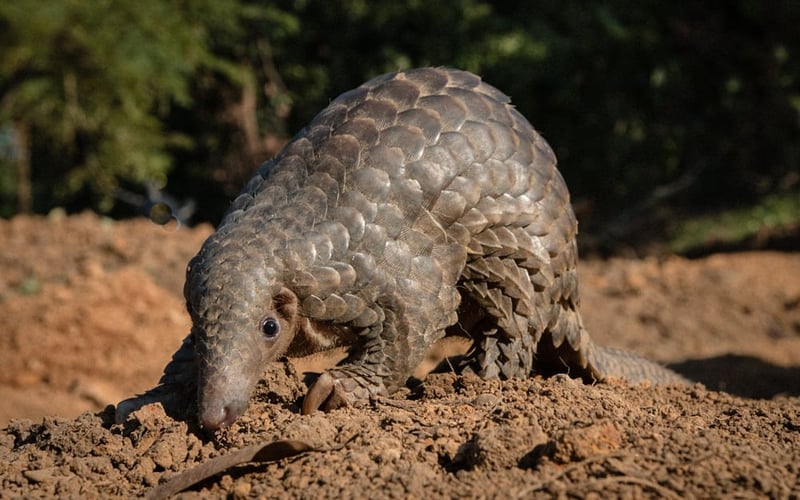
World Pangolin Day 2026: Protecting the World’s Most Trafficked Mammal
Blog
Every year, World Pangolin Day invites the world to pause and pay attention to an animal most people rarely see and few truly understand. Pangolins are quiet, solitary, and elusive. Yet they are also the most trafficked wild mammals on the planet.
World Pangolin Day 2026 is not just about awareness. It is about recognition, responsibility, and action.
Between 2016 and 2024, seizures of pangolin products involved more than an estimated half a million pangolins across 75 countries and 178 trade routes, according to a joint report prepared by the International Union for Conservation of Nature and the Convention on International Trade in Endangered Species for CoP20 in 2025.
These figures reveal a trade that is vast, organised, and relentless.
At World Animal Protection, we believe pangolins deserve more than sympathy. They deserve protection rooted in evidence, community leadership, and long term solutions.
This is the moment to bring their story into the open.
Why Pangolins Are Being Trafficked at Scale
Pangolins are targeted primarily for two reasons. Their meat is considered a delicacy in some markets, and their scales are falsely believed to have medicinal value.
Despite having no proven medical benefit, pangolin scales continue to fuel a vast illegal trade. This demand has created highly organised trafficking networks that stretch across continents, linking rural communities to international criminal syndicates.
What makes pangolins especially vulnerable is their biology. They reproduce slowly, typically giving birth to just one offspring per year. When populations are hit by sustained poaching, recovery becomes extremely difficult.
All eight species of pangolin are currently listed as threatened with extinction by the IUCN. Yet illegal trade continues.
This is why pangolins are disappearing silently, without the global attention afforded to elephants, rhinos, or big cats.
Africa’s Central Role in the Pangolin Trade
Africa is not only a source region. It is also a frontline of protection.
Across East, West, and Central Africa, countries including Kenya, Uganda, Cameroon, and Nigeria have increasingly been identified as source and transit points in global wildlife trafficking routes.
But Africa is also where solutions can take root.
Communities living alongside wildlife are often the first to encounter poaching activity. Rangers, local conservation groups, and community members see the warning signs before anyone else.
When empowered and supported, they become the strongest line of defence.
As Edith Kabesiime, Wildlife Campaign Manager at World Animal Protection, explains:
“Pangolins are being hunted, trafficked and exploited at alarming levels. But there is hope. If we strengthen enforcement, empower communities, and reduce consumer demand, we can turn the tide.”
World Pangolin Day 2026 highlights this truth. Ending wildlife trade is not only about enforcement. It is about placing trust, resources, and leadership in the hands of communities.
The Hidden Costs of Pangolin Trafficking
The illegal trade in pangolins causes far more harm than the loss of a single species.
Impact on animal welfare
Pangolins are often captured using cruel methods. They are transported alive in sacks, crates, or hidden compartments. Many die before reaching their destination. Those that survive suffer severe stress, injury, and neglect.
Impact on ecosystems
Pangolins play a vital role in controlling insect populations. A single pangolin can consume thousands of ants and termites in a day. Removing them disrupts ecosystems and weakens natural balance.
Impact on public health
Wildlife trade increases the risk of disease transmission. Pangolins have been linked to zoonotic disease pathways, underscoring the wider risks of exploiting wild animals for consumption and trade.
Protecting pangolins is not only about conservation. It is about health, sustainability, and resilience.
Why World Pangolin Day Matters More Than Ever
World Pangolin Day is not symbolic. It is strategic.
It provides a moment when governments, conservationists, communities, and the public can align around a shared goal. Protecting pangolins requires collaboration across borders and sectors.
For World Animal Protection, World Pangolin Day 2026 is the starting point of a sustained global effort. One that will continue through research releases, policy engagement, community action, and public mobilisation.
This is how real change happens. Step by step, grounded in evidence and compassion.
How You Can Support Pangolin Protection
You do not need to live near a forest to make a difference.
You can support pangolins by:
- Learning about the realities of wildlife trade
- Sharing trusted information
- Supporting organisations that work with communities on the ground
- Rejecting wildlife products in all forms
Every action helps shift the narrative from exploitation to protection.
Conclusion
World Pangolin Day 2026 reminds us of a hard truth. Pangolins are disappearing because humans are exploiting them. But it also offers hope.
Across Africa and beyond, communities are stepping forward. Evidence is being gathered. Stories are being told. Solutions are taking shape.
Protecting pangolins is about more than saving one species. It is about ending wildlife trade, safeguarding ecosystems, and choosing a future rooted in respect for animals and people.
The fight for pangolins is far from over. But together, it is a fight we can win.
Frequently Asked Questions
Why are pangolins called the most trafficked mammal
Pangolins are trafficked more than any other wild mammal due to demand for their meat and scales, which are used illegally despite international bans.
Are pangolins protected by international law
Yes. Pangolins are listed under the highest level of protection through international wildlife agreements, but enforcement remains weak in many regions.
Can pangolins survive in captivity
Pangolins do not adapt well to captivity. Rescue and rehabilitation efforts focus on stabilisation and rewilding whenever possible.
How does wildlife trade affect local communities
Wildlife trade undermines sustainable livelihoods, fuels criminal networks, and increases health and security risks for local populations.
What makes community led protection effective
Local communities understand their environments best. When supported with training and resources, they can monitor, protect, and respond more effectively than external enforcement alone.