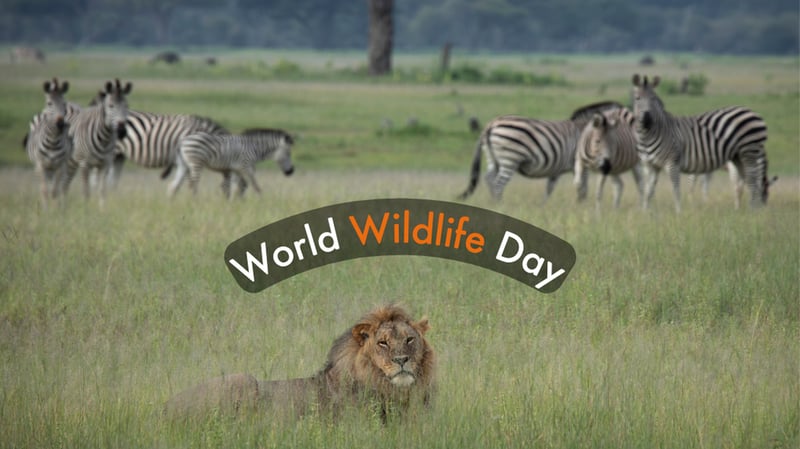
World Wildlife Day 2026: Why Protecting Wildlife Matters Now More Than Ever
Blog
Every year on March 3, the world marks World Wildlife Day. It is more than a celebration of animals. It is a reminder that wildlife protection is inseparable from our own survival.
In 2026, that reminder feels urgent. Across continents, wild species are declining at a pace that should concern every one of us. Wildlife is increasingly confined, traded, and exploited. Yet solutions exist.
The 2026 theme of World Wildlife Day focuses on medicinal and aromatic plants and their role in sustainable ecosystems. This theme reminds us that wildlife protection is deeply connected to plant biodiversity and traditional knowledge systems. Healthy ecosystems depend on both fauna and flora. When wildlife declines and habitats are degraded, plant species are also affected, disrupting cultural practices, livelihoods, and ecological balance. Protecting wildlife is therefore part of protecting the broader natural systems that sustain life.
The Global Wildlife Crisis in Numbers
Wildlife loss is not speculation. It is a documented reality.
According to the IUCN Red List of Threatened Species, more than 47,000 species are currently threatened with extinction. Over 169,000 species have been assessed, and nearly one in four faces extinction risk.
The leading drivers include habitat destruction, climate disruption, poaching, and the illegal and commercial wildlife trade. These have significant impacts on wildlife populations: elephants targeted for their ivory, pangolins trafficked for their scales, birds of prey captured for trade, and countless marine species harvested beyond recovery.
When biodiversity declines, ecosystems weaken. And when ecosystems weaken, people suffer.
Why Wildlife Protection Matters in 2026
Wildlife is not separate from us. It supports the systems that sustain life.
Ecosystem Balance and Biodiversity
Elephants disperse seeds that regenerate forests. Predators regulate prey populations. Wetland species maintain water quality. Pollinators support crops that feed millions.
Remove wildlife, and the balance collapses.
Biodiversity acts as a safety net. The more diverse an ecosystem, the more resilient it is to drought, disease, and climate stress.
Climate Stability
Healthy ecosystems store carbon and regulate temperature. Grasslands, forests, and oceans all rely on wildlife interactions to function properly.
Protecting wildlife strengthens natural climate solutions.
Human Wellbeing
Wildlife conservation supports tourism, food systems, and livelihoods. It also reflects an ethical responsibility. Wild animals are sentient beings with intrinsic value. They are not products, attractions, or commodities.
The Hidden Threat of Wildlife Exploitation
One of the most pressing yet overlooked threats is commercial wildlife exploitation.
Wildlife Farming and Captivity
Across parts of Africa and beyond, wildlife farming continues under the label of conservation. In reality, many facilities breed animals for skins, meat, trophies, or entertainment.
Investigations in Kenya have revealed ostriches confined without shelter, crocodiles crowded in dirty water, and tortoises removed from the wild and sold for minimal profit. These are not conservation practices. They are systems driven by revenue, not welfare.
Wildlife Tourism and False Conservation
Tourist attractions that offer animal interactions often claim to promote education. Yet forcing wild animals into close contact with visitors causes stress and long term harm.
Wildlife belongs in the wild, not in arenas, cages, or photo opportunities.
Wildlife Trade and Traditional Medicine
Wildlife exploitation does not happen in isolation. It is often driven by demand far beyond the places where animals live. Pangolins, for example, are trafficked for their scales, which are used in some traditional medicine systems despite having no proven medical benefit. That demand can place enormous pressure on wild populations in Africa. But change is possible.
In recent years, progress has been made in promoting plant based alternatives to animal derived ingredients. In China, certain wildlife based medicinal products have been removed from official listings, reflecting a growing recognition that wildlife protection and cultural practices can evolve together. When plant alternatives replace animal products, pressure on wild species decreases. Protecting wildlife means addressing demand as well as supply.
The Link Between Wildlife Protection and Public Health
Wildlife protection is also a public health issue.
Zoonotic diseases originate when pathogens jump from animals to humans. Crowded and unsanitary wildlife facilities create conditions where disease can spread rapidly. When we confine wild animals in stressful environments, we increase the risk of outbreaks.
Protecting wildlife habitats and ending exploitative farming practices reduces these risks. Safeguarding animals safeguards people.
What Real Wildlife Conservation Looks Like
Effective wildlife protection is grounded in science and community leadership.
Community Led Conservation
Local communities play a critical role in protecting wildlife corridors and managing land responsibly. When conservation supports livelihoods, it becomes sustainable.
Strong Legal Frameworks
Governments must enforce wildlife protection laws and regulate trade responsibly. Transparency and accountability are essential.
Protecting Natural Habitats
Wild animals require space to roam, migrate, and reproduce. Protecting forests, wetlands, and savannas is fundamental.
Conservation must prioritize freedom and ecological integrity.
World Wildlife Day 2026: A Call to Choose Protection
This World Wildlife Day is an opportunity to reflect honestly. Wildlife is under pressure, but change is possible.
Each of us can contribute by supporting ethical tourism, rejecting wildlife entertainment, questioning wildlife products, and advocating for stronger protections.
Wild animals do not exist for human use. They are part of the living systems that sustain our planet.
Frequently Asked Questions
- Why is World Wildlife Day important?
World Wildlife Day raises awareness about biodiversity loss and encourages action to protect wild animals and plants globally.
- What does the IUCN Red List measure?
The IUCN Red List assesses the extinction risk of species worldwide and provides scientific data on conservation status.
- How does wildlife protection support climate resilience?
Healthy ecosystems store carbon and regulate environmental systems. Protecting wildlife helps maintain these natural processes.
- Is wildlife farming beneficial for conservation?
Evidence shows that wildlife farming often prioritizes profit over welfare and can increase demand for wild animals rather than reduce it.
- How can individuals support wildlife conservation?
People can support ethical organizations, avoid wildlife entertainment, advocate for stronger policies, and raise awareness within their communities.