Kenya’s Live Reptile Exports Surge 10-Fold as Over 870,000 Animals Enter Global Trade
Kenya is widely known for its wildlife. But behind that image is a lesser-known reality: the country is also part of a growing global trade in live wild animals and wildlife products.
A new peer reviewed scientific paper has now put numbers to that reality. Based on legal, government-reported CITES trade data, the study shows that more than 870,000 live animals were exported from Kenya between 2013 and 2023, with reptiles making up the overwhelming majority. Over that same period, live reptile exports increased more than tenfold, rising from 8,551 animals in 2013 to 86,330 in 2023.
What the paper found
The paper, titled “Rising Reptile Trade from Kenya: Analysis of CITES-Listed Captive-Bred Wildlife Exports,” analysed official CITES export records from 2013 to 2023. It found that Kenya reported 886 export records involving 28 vertebrate taxa across nine orders. Reptiles dominated the trade, accounting for 81% of all export records.
The findings also show that 80% of export records involved live animals, and that 93.6% of exports were for commercial use. At least 43 countries imported these animals and wildlife products, with the United States, Germany, Spain, Taiwan, the United Kingdom, and the Republic of Korea among the leading destinations.

Fig 1. Total annual number of live CITES-listed captive-bred and ranched reptile exports from Kenya between 2013 and 2023. Grey shaded area: 95% confidence interval around the fitted trend line.
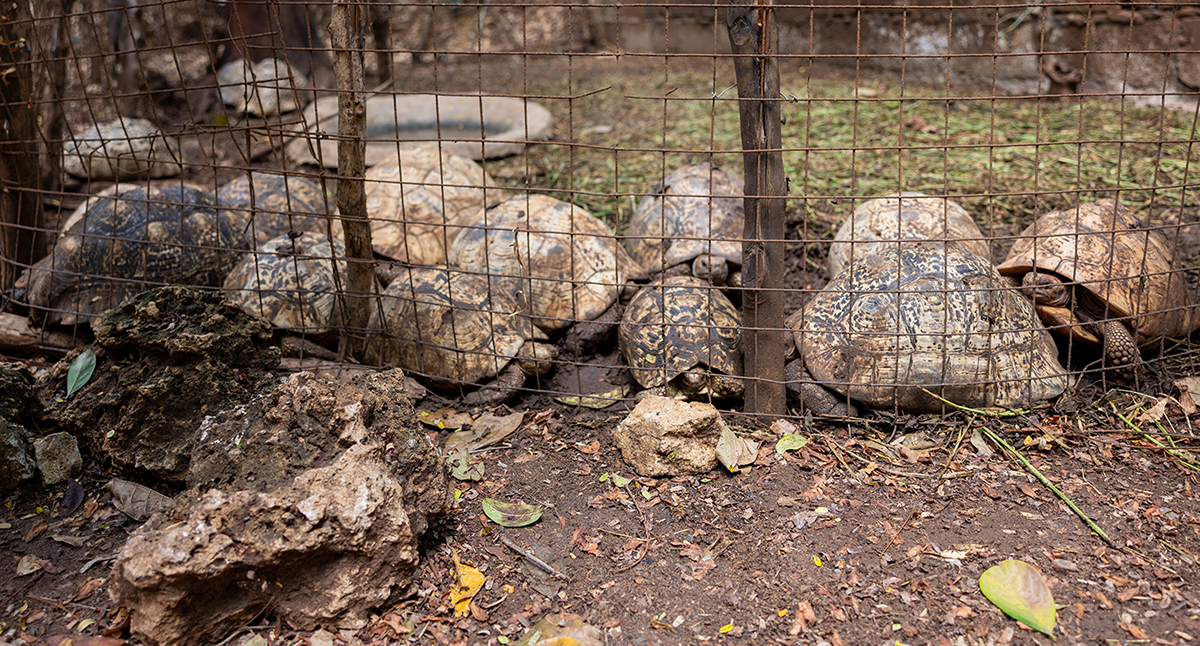
Some of the most frequently exported animals included leopard tortoises, Jackson’s three-horned chameleons, Kenyan high-casqued chameleons, and Taita blade-horned chameleons. The paper also found that 77% of traded species had unknown or declining wild populations, and at least seven traded species were internationally threatened, including the critically endangered pancake tortoise.
 Fig 2. Some of the most frequently exported CITES-listed live reptiles from Kenya between 2013 and 2023: Top left pancake tortoise (credit: Roberto Sindaco); top right Leopard tortoise (credit: Neil D’Cruze); bottom left Elliot’s groove throated chameleon (credit: Erik Möller Creative Commons Attribution-Share Alike 2.0 Germany license); bottom right Jackson’s three horned chameleon (credit: “Trioceros jacksonii 114285602” by Marius Burger,
Why this matters
Animal welfare cannot be ignored
A trade system moving live animals at this scale raises major welfare concerns. Reptiles are confined, handled, transported, and traded through commercial supply chains. The paper highlights concerns including stress, injury, dehydration, and mortality, especially for highly sensitive animals like chameleons. Welfare must be part of the conversation.
Monitoring gaps remain visible
The paper found major discrepancies between exporter and importer records, including differences of more than 84,000 leopard tortoises, 21,800 Jackson’s three-horned chameleons, and 9,100 Kenyan high-casqued chameleons. These are not minor inconsistencies. They point to monitoring and reporting weaknesses in a fast-growing trade system.
Public health is part of the story
Wildlife trade also raises biosecurity and zoonotic disease concerns. The movement of live animals through breeding, confinement, and transport systems creates conditions where disease risks can grow. That makes this not only a conservation and animal welfare issue, but also a public health issue.
Kenya’s policy moment
The paper comes at a critical time, as Kenya reviews its wildlife laws through the proposed Wildlife Conservation and Management Bill 2025. This creates an opportunity to ask harder questions about oversight, traceability, welfare protections, and the long-term sustainability of current trade systems.
World Animal Protection’s policy recommendations:
The findings point to the need for:
- Stronger regulation and traceability of captive breeding and ranching operations.
- Routine welfare audits across captive breeding operations and wildlife trade supply chains, supported by stronger biosecurity measures and pathogen surveillance.
- Targeted demand-reduction initiatives in importing countries to reduce demand for wild animals in the pet and luxury markets.
Conclusion
Kenya’s reptile trade is rising fast, and the data now shows that clearly.
This is a moment for stronger scrutiny, stronger safeguards, and stronger policy action. Wild animals should not be reduced to commercial units in a system that overlooks welfare, weakens oversight, and raises growing ecological and public health concerns.
They are living beings, and they deserve more than a trade system built around scale and profit.
FAQs
- What is driving the rise in Kenya’s reptile exports?
The paper shows a sharp increase in commercial exports over the last decade, with 93.6% of export records listed as commercial. Reptiles dominated the trade, accounting for 81% of all export records, which points to strong and growing market demand.
- Which countries are importing reptiles from Kenya?
The study found that Kenya’s exports reached at least 43 countries. Among the leading importers were the United States, Germany, Spain, Taiwan, the United Kingdom, and the Republic of Korea.
- Are threatened species included in this trade?
Yes. The paper found that at least seven traded species are internationally threatened, including the critically endangered pancake tortoise. It also found that 77% of traded species have unknown or declining wild populations, which raises serious concerns about long-term sustainability.
- Why are trade record discrepancies such a concern?
Because they point to weaknesses in monitoring and reporting. The paper found major mismatches between exporter and importer records, including discrepancies involving leopard tortoises, Jackson’s three-horned chameleons, and Kenyan high-casqued chameleons. When records do not align, confidence in oversight weakens.
- What changes should happen next?
The findings support stronger regulation of captive breeding operations, routine welfare audits, improved biosecurity, better traceability, and deliberate efforts to reduce demand for wild animals.