Ending Lion Farming in South Africa
Download ReportInternational Poll: Tourist and Public Attitudes Toward Captive Lion Farming in South Africa
A new international poll commissioned by World Animal Protection in collaboration with Blood Lions reveals strong opposition to commercial captive lion breeding in South Africa from both international tourists and South African citizens.
The research surveyed 2,528 adults across South Africa, the United Kingdom, the United States, Germany, and the Netherlands, examining public attitudes toward the country’s captive lion breeding industry and its potential impact on tourism and national reputation.
The findings are clear. Across all audiences, respondents overwhelmingly support wildlife-friendly tourism and express concern that captive lion breeding damages South Africa’s global reputation.

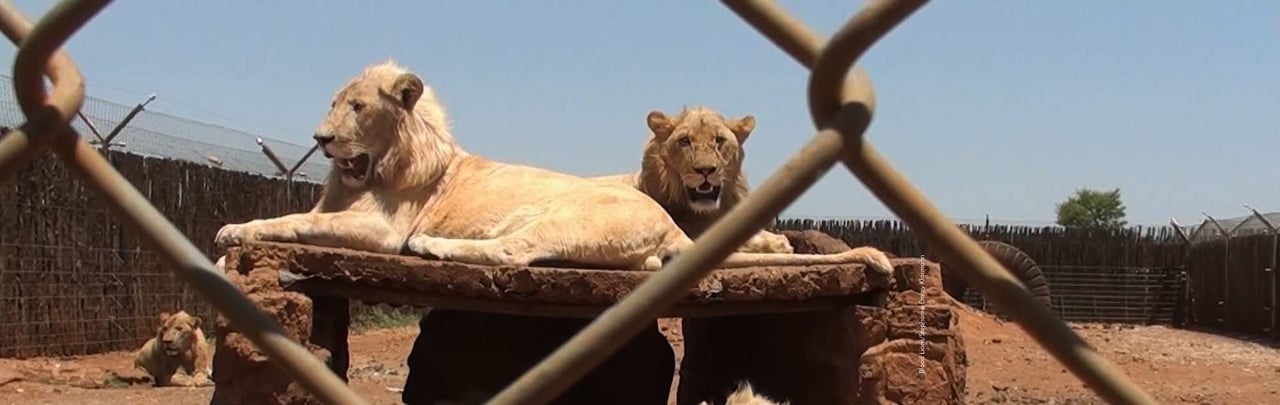
Photo Credit to: Blood Lions/Stephanie-Emmy Klarmann
Key Poll Findings
International tourists are rejecting captive lion breeding
Among respondents from four key tourism markets visiting South Africa, the poll found strong opposition to the industry.
- 70% say they would avoid visiting a country that allows lions to be bred and kept in captivity for profit.
- 69% say reversing the phase-out would damage South Africa’s reputation as a responsible and ethical tourist destination.
- 65% say they would choose alternative travel destinations instead.
- 77% say governments should prioritise wildlife-friendly tourism over captive lion breeding.
These results show that captive lion breeding is not viewed as a minor ethical concern. Instead, it is seen as a serious tourism and reputational risk.

Figure 1: Percentage of respondents across five key source markets who agree with the phase out of captive lion breeding (Base: All respondents, n = 2,528).
South African citizens also oppose captive lion breeding
Public opinion within South Africa reflects similar concerns.
The poll found that:
- 66% say commercial captive lion breeding is unethical.
- 72% reject promoting exploitative wildlife industries ahead of wildlife-friendly tourism alternatives.
- 63% say reversing the phase-out would undermine trust in evidence-based government decision making.
- 57% believe banning captive lion breeding would make South Africa a more attractive tourist destination.
Concern for lion welfare emerged as the strongest reason for supporting the phase-out.

Figure 2: Percentage of international tourists across four key source markets who agree that reversing the phase-out would harm South Africa’s reputation as a conservation leader (Base: UK, USA, NL, DE; n = 2,009).
What Is at Stake for South Africa
Tourism plays a vital role in South Africa’s economy.
According to the World Travel and Tourism Council, tourism contributes around nine percent of the country’s GDP and supports approximately 1.8 million direct and indirect jobs.
In 2025 alone, South Africa welcomed nearly 10.5 million international tourists. Visitors from the United Kingdom, the United States, the Netherlands and Denmark account for a significant share of these arrivals.
If the phase out of captive lion breeding were reversed, the poll suggests that nearly 860,000 tourists from these key markets could be deterred from visiting the country.
This could translate into a potential loss of around 66,000 tourism related jobs, based on current employment patterns in the tourism sector.
By comparison, the commercial captive lion breeding industry supports between 1,568 and 2,069 jobs across approximately 350 facilities.
The research therefore raises an important question for South Africa’s future tourism strategy. Should the country prioritise industries that exploit wildlife, or focus on tourism models that protect animals and strengthen its global reputation?
Understanding the Captive Lion Breeding Industry
South Africa is currently the only country in Africa that permits the commercial breeding of lions and other predators for profit.
Thousands of lions are held in captivity across hundreds of facilities. Many of these facilities generate revenue through activities such as cub petting, walking with predators, captive hunting, and the trade in lion bones and body parts.
For many members of the public, these practices raise serious ethical concerns. The poll findings reflect growing discomfort with industries that confine and breed wild animals for commercial gain.
At the same time, there is strong support for tourism experiences that allow wildlife to live freely in natural environments.
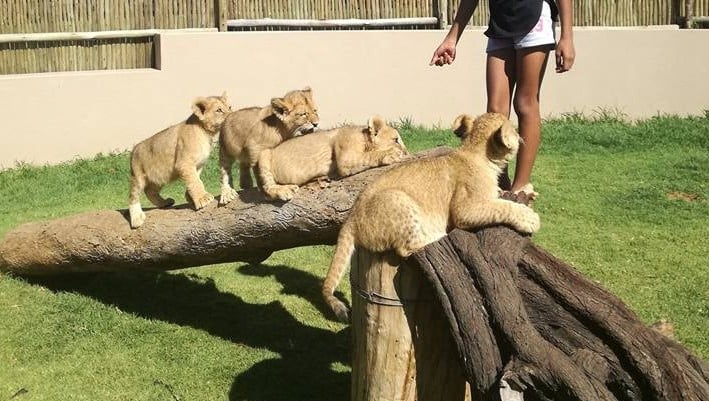
Photo Credit to: Blood Lions/Stephanie-Emmy Klarmann
Why Public Opinion Matters
Tourism decisions are increasingly shaped by ethical considerations.
Travellers today are more aware of how animals are treated and are more likely to choose destinations that reflect their values.
The results of this poll suggest that prioritising wildlife-friendly tourism is not only an ethical choice. It is also a smart economic strategy.
By protecting wildlife and strengthening ethical tourism experiences, South Africa can maintain its reputation as one of the world’s leading wildlife destinations.
Download the Full Poll Report
The full report provides detailed findings, methodology, and analysis of public attitudes toward captive lion breeding.